How Ukraine’s gonzo tech-minister went from outsider to revolutionary
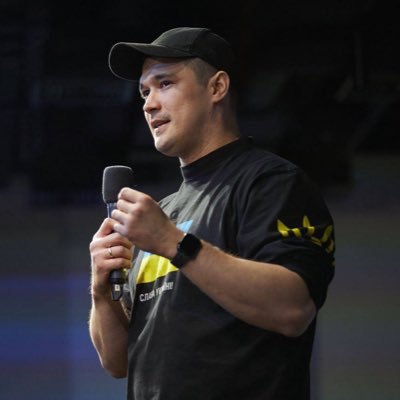
Before 2019, when he joined the Ukrainian government as an advisor, nobody had heard of Mykhailo Federov. As of July 2025, he has helped to transform Ukraine into a battle ready nation and established the country’s future as a hub of defence-tech and manufacturing.
He first entered the world of politics 5 years earlier, during an unsuccessful run to join the Ukrainian parliament in 2014 representing the fringe libertarian party, ‘5.10’. The party had won only 0.42% of the vote, failing dramatically to reach the minimum threshold of 5% required to be represented in parliament. By all measures, Federov was an outsider. He was a 23 year old running for a party which advocated for total abolition of the taxation system, and the introduction of a single rate of tax (5% on sales, 10% on payroll). He seemed to be destined to remain on the radical fringes of politics.
However, during the 2019 election, Federov appeared to superficially shed his radical views and prioritise entering mainstream politics. He was hired to assist in the campaign for Zelensky, and following his appointment as president, became an advisor in his government. During 2019 he was appointed Minister for Digital Transformation, developing ‘Diia’, the Ukrainian ‘state in a smartphone’ service which aimed to offer all government services in one location and to reduce the possibility of governmental corruption.
However, Federov’s unique insights stemming from his fringe and slightly more radical political beliefs and emphasis on technological advancements began to shine following the full scale Russian invasion of Ukraine, in the most perfect and fascinating way. Federov recognised early that unmanned and autonomous technology would be vitally important in defending Ukraine. He pushed hard to deregulate the drone industry, and created the ‘Army of Drones’ project, which trains pilots and procures equipment. The project has expanded since it’s creation, now including a ‘points based marketplace system’, which allows military units to exchange points (earned by confirmed kills) for equipment, including drones and other hardware. Federov’s history with 5.10, and libertarian views on markets and incentivisation are brutally evident here.
Federov has managed also to turn Diia into a dual purpose platform, whilst introducing new governmental services which Ukrainian citizens can access elsewhere online. Diia now includes features which allow citizens to report the position of Russian troops, damage to their property caused by Russian bombardment and to gain access to educational materials so that displaced children can still learn. eVorog, another platform he has created, allows further reporting on Russian troop positions, and also allows citizens to log and report warcrimes and collaborators in the hopes that justice can be served either during or after the war. Outside of Diia and eVorog, Federov has been exploring the use of AI in psychological warfare. AI facial recognition is being employed to identify the names of dead Russian soldiers, allowing the Ukrainian military to contact their families in Russia to inform them of their death and discourage them from supporting the war effort.
If Russia never invaded in 2022, Federov would simply be known as the minister who delivered Diia, before inevitably being forgotten. Since the war started, however, he has become a key figure in the modern Ukrainian story. His former involvement in radical politics have forged a minister who is almost designed to not only operate, but thrive in an extreme environment. As Hunter S. Thompson once claimed, ‘when the going gets weird, the weird turn pro’.
 The Vantage Report
Leave a comment