On Saturday the 14th March 2026, Donald Trump claimed that the United States had destroyed ‘100% of Iran’s military capability’. If there is one thing that the war in Ukraine has taught us, it is that when properly motivated, a state can scale its wartime arms production with serious speed. Trump may have dealt a series of serious blows to Iran’s toolkit, but it will not take much for the regime to sustain a war effort, or continue to choke world trade.
In 2022, when Russia first invaded Ukraine, it did not domestically produce any Geran-2 (Shahed-136) drones. They initially purchased a small quantity (up to around 6000) from Iran, and quickly set their sights on building manufacturing plants. By 2023 they had the Alabuga drone factory where they were able to produce around 200 Geran-2 drones per month. In 2024, they saw a major increase in production and by December of that year they were able to produceup to 2000 Geran-2 drones per month. By May of last year, Russia’s production capacity was up to around 2700 Geran-2 drones and another 2500 ‘simulator’ drones used to overwhelm air defences in a single month (according to Ukrainian intelligence), and production is likely to increase further.
Mass production of these drones has changed what it means to be ‘war ready’. A massive reduction in Iran’s arsenal of missiles, air capabilities and ground capabilities would weaken the regime but Trump’s pronouncement should not convince anyone they are no longer a threat. If Iran follows Russia’s blueprint, even heavy losses today are unlikely to prevent them from sustaining a long campaign of drone attacks tomorrow.
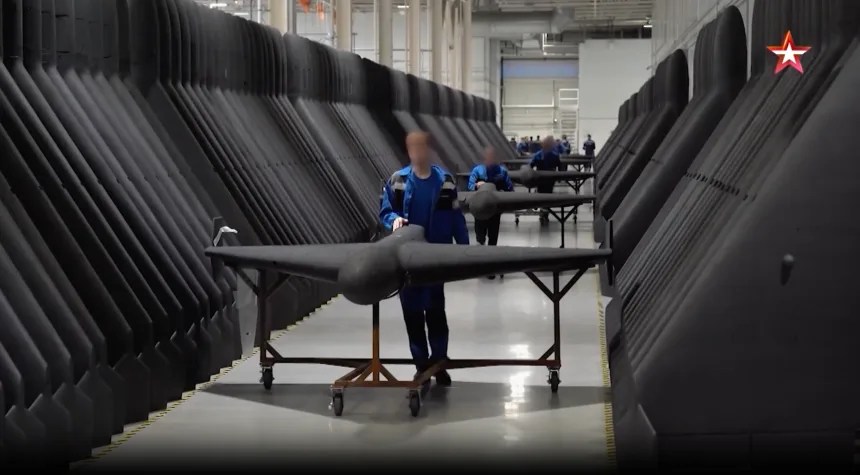
(Russia’s Alabuga drone factory, as shown on TV Zvezda)
Besides, Iran’s strategy is to buy time. They retain the ability to hit American bases in the Gulf, as well as Gulf allies, with their current stockpile of drones and missiles. From almost anywhere in Southern or Central Iran they are able to launch a Shahed which could reach the Strait of Hormuz, meaning that even if missile and naval drone production slows, they will continue to threaten global trade flows should the current mess continue.
Russia’s continuation of the war against Ukraine should have shown to the United States what modern war looks like, and how a state can remain a threat at a low cost. Iran is more than capable of continuing this conflict, and their recent statements reaffirming their lack of interest in diplomacy at the minute makes that very clear.
 The Vantage Report
Leave a comment